A few photos from a couple of days ago on our way to Madrid
Saturday, November 5, 2011
Friday, November 4, 2011
Spain and Portugal Day 11, the Alhambra
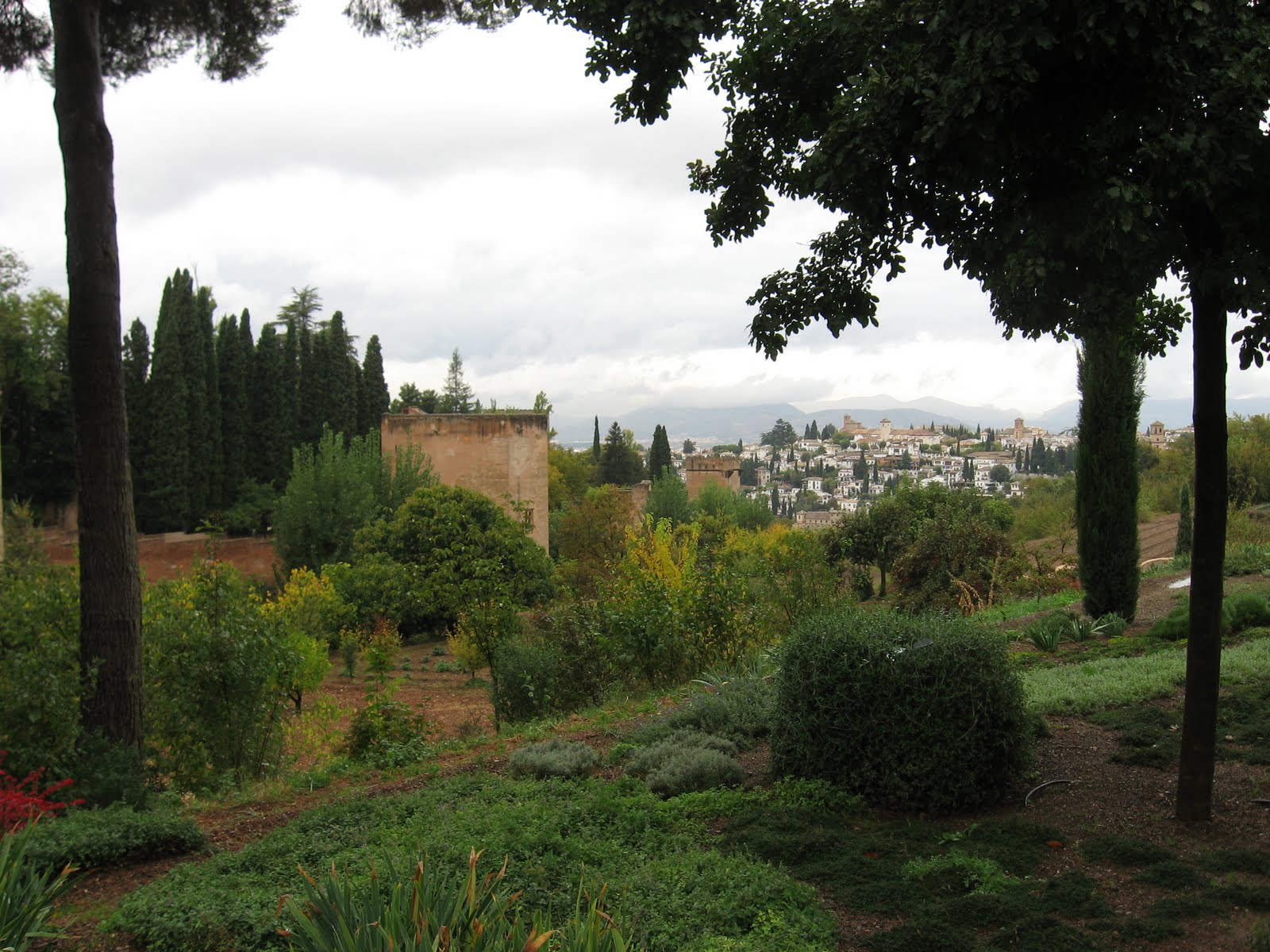
Left Ronda this am and traveled to Granada to see the Alhambra. The weather was not cooperating as it was raining a lot most of the day and pretty hard when we arrived at the Alhambra. We had a good tour of the Moorish palaces. The Alhambra was started in te 13th century and was added to over the next 200 years by each successive caliph. It was taken over in 1492 by Isabella and Ferdinand and the Moors were expelled a few years later.
Wednesday, November 2, 2011
Spain and Portugal Day 10, Ronda 2

Our guide in Ronda, Diego
Had a tour of the old city this morning. Very interesting tour guide named Diego. Lots of witty comments along the way.
Went into the Church were styles from the Moors, Gothic, Renaissance and Baroque were exhibited.
The Bull Ring was quite the thing. It dates from the 18th century but is still in use. It is completely circular and the spectators are really close to the arena were the bulls and matadors play out the drama. Diego explained to us the this was not really a bull fight as the outcome was certain, the bull would die one way or another, and it would only depend on how well it was done. It turns out that Orson Wells and Ernest Hemingway attended bull spectacles here (not at the same time). The Mediterranean Sun Coast is close by and the VIPs come over to Ronda to see the bull fights.

Section of the Bull Ring.
Our Parador (hotel) as situated right on the edge of the gorge. We walked down into the ravine, great view back up at the "New Bridge" and a waterfall. From the down in the gorge looking up gave a nice perspective of the location.

New Bridge (18th century) from down in the gorge.
Parador is located on the upper left edge.
Tuesday, November 1, 2011
Spain and Portugal Day 9, Ronda
Arrived in Ronda around noon today. Will be here until Thursday AM. Spectacular setting of the old city next to a deep, narrow gorge. There are three bridges crossing the gorge, the new bridge (18th century), the Felipe V bridge of the 16th century and an earlier bridge of the ~14th century.


Great view across the gorge at old buildings
with restaurants and other shops and apartments.

A little friend along one of the garden
paths along side the gorge.
Monday, October 31, 2011
Spain and Portugal Day 8

Mosque in Cordorba, 12th century
Visited Cordoba today. Great former Mosque, now a church. In the ~16th century a cathedral church was put right in the middle of the existing Mosque, bad idea, even though the cathedral is spectacular in it's own right. The Mosque was built in 12th century.

Cordoba has what is termed a Jewish district, very narrow streets like a labyrinth, easy to get lost.

Heliostat tower shinning brightly in the distance. Mirrors too far away to see.
On the road to and from Cordoba we saw a Heliostat in operation. Mirrors focusing the sun into a central tower that then is turned into electricity by steam turbines.
Sunday, October 30, 2011
Spain and Portugal Day 7
It's been really busy and limited internet access the last several days. We're now in Carmona, Spain and using the Parador (old name for a hotel) here as a base for trips to Seville today and Cordoba tomorrow.
I will post a few photos from today's visit to Seville below and try to catch up on the last couple of days later tonight. Seville seems to have every building in the old section looking like a work of art. Strong influence of the Moors on the architecture. The Moors were defeated here in 12th century but the Spanish kings really liked their architecture and hired the Moorish craftsmen to build there Cathedrals and their Palaces.
Cathedral tower. Lower part is original Moorish tower associated with a Moskque but was made into a Christian church tower starting with the bell tower.
Hose and carriage in the central square of Seville.
This is the panel at the Spanish Square that was build in the 1920's. Each Spanish region had a panel, and this one shows Don Qixote and Sancho Panza, the mythical figure from Cervantes novel.
View from inside of the Alcazar Place showing the Moorish architecture even though this was built by a Christian King.
Thursday, October 27, 2011
Subscribe to:
Posts (Atom)